HomeBlogTelehealth BasicsHow Online Doctor Visits Work: Step-by-Step
How Online Doctor Visits Work: Step-by-Step
Blog Published:01/20/2026 Updated01/20/2026 Online doctor visits make it possible for patients to speak with licensed healthcare professionals without going to a physical […]
How Online Doctor Visits Work: Step-by-Step
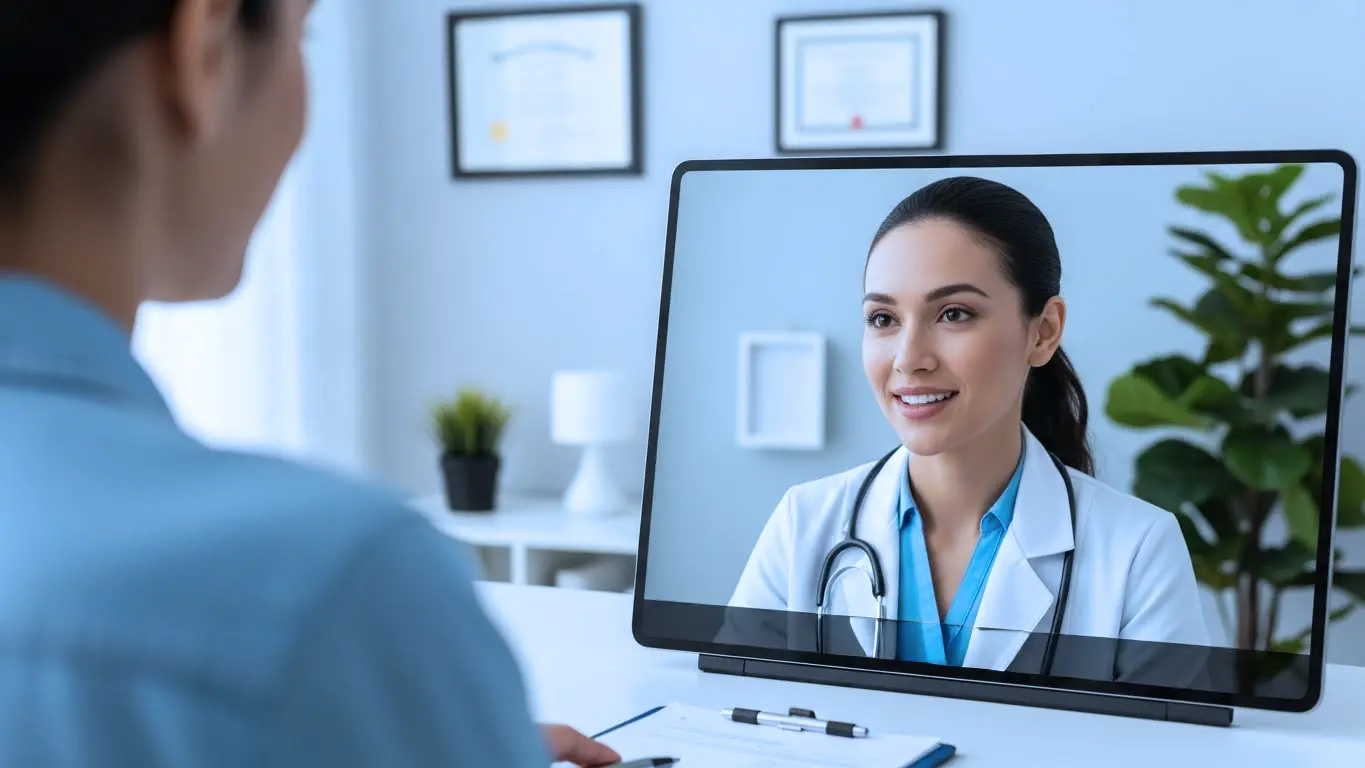
Online doctor visits make it possible for patients to speak with licensed healthcare professionals without going to a physical clinic. These visits take place through secure digital tools—most commonly video calls, phone consultations, or protected messaging systems—and are designed for non-emergency medical needs. The goal is not to replace in-person care, but to offer another way for patients and providers to communicate when hands-on evaluation is not required.
People often look for clear explanations of how online doctor visits work because virtual care follows a different process than traditional office visits. Instead of checking in at a front desk or waiting in an exam room, patients move through a structured digital flow that includes account setup, eligibility checks, provider matching, and a guided consultation. Each step exists for a reason, largely tied to patient safety, privacy protections, and medical licensing requirements.
This article explains that process step by step using general, educational information. It does not provide medical advice, diagnosis, or treatment recommendations. Online doctor visits have defined limits, and licensed providers determine whether a concern can be addressed remotely or requires in-person care. Understanding these boundaries helps patients use telehealth appropriately and with realistic expectations.
Step 1: Choosing a Telehealth Platform
The first step in understanding how online doctor visits work begins before any medical conversation takes place. Patients start by choosing a telehealth platform that provides access to licensed healthcare professionals through secure digital tools used in telehealth services. While many platforms appear similar on the surface, they can differ in important ways that affect how online visits are delivered.
At this stage, patients are not selecting a doctor or receiving care yet. They are choosing the technology and service structure that will support the visit.
What Telehealth Platforms Actually Do
A telehealth platform is not the medical provider itself. Instead, it serves as the system that enables online visits by handling tasks such as:
- Secure video, phone, or messaging technology
- Patient account creation and identity verification
- Matching patients with appropriately licensed providers
- Protecting personal health information
- Managing scheduling and visit records
The medical care, decisions, and recommendations come from the licensed provider—not the platform.
Key Differences Between Telehealth Platforms
When learning how online doctor visits work, it helps to know that platforms may vary in areas such as:
- Types of care offered: Some platforms focus on general medical questions, while others include mental health, pediatric care, or pet telehealth guidance.
- Visit availability: Platforms may offer on-demand visits, scheduled appointments, or a combination of both.
- Provider licensing coverage: Providers must be licensed in the patient’s state, which affects availability and eligibility.
- Privacy and data protection practices: Reputable platforms clearly explain how patient information is stored and protected.
These differences influence whether a platform can support a patient’s needs appropriately.
Why Transparency Matters at This Stage
Before moving forward, responsible telehealth platforms explain what they can—and cannot—support through online care. This includes clear statements about:
- Non-emergency use only
- Situations that require in-person evaluation
- How providers determine whether virtual care is appropriate
This transparency helps patients set realistic expectations and supports safe use of online healthcare services.
Reputable telehealth platforms typically outline provider licensing, privacy protections, and care limitations before a visit begins. Clear disclosures help patients understand whether online care is appropriate for their situation.
Step 2: Creating an Account and Verifying Eligibility
Once a telehealth platform is selected, the next part of how online doctor visits work involves creating a secure account and confirming eligibility for care. This step takes place before a visit is scheduled or started, and it exists to protect patients, providers, and the integrity of the medical encounter.
Unlike a casual online form, account creation for online doctor visits is part of a regulated healthcare process. Telehealth services, including platforms such as RemoteMD, use this step to support secure video consultations with licensed healthcare professionals while meeting legal, privacy, and licensing requirements. These checks help ensure that virtual care is delivered responsibly and within established healthcare standards.
Why Account Creation Is Required
Account creation allows telehealth platforms to establish a secure environment for medical communication and to prepare for a compliant online visit. During this step, patients are typically asked to provide:
- Full name and date of birth
- Contact information
- State of residence
- A basic reason for the visit
This information helps the platform support secure communication, match patients with appropriately licensed providers, and maintain confidentiality throughout the visit process.
How Eligibility Verification Works
Eligibility checks are a core part of how online doctor visits work, even though they may feel administrative from the patient’s perspective. These checks help determine whether a virtual visit is appropriate and legally permitted.
Eligibility verification commonly includes:
- Location confirmation
Healthcare providers must be licensed in the state where the patient is physically located at the time of the visit. - Age requirements
Certain types of online care have minimum age limits or may require parental or guardian involvement. - Visit suitability screening
Patients may answer brief questions to confirm that their concern is appropriate for online care and not an emergency.
These steps do not involve diagnosis or treatment. Instead, they help route patients safely and ensure that online care is used only when appropriate.
Privacy and Data Protection Expectations
Because online doctor visits involve personal health information, telehealth platforms are expected to use secure systems and clearly explain their privacy practices. Creating an account enables encrypted communication and controlled access to visit details and records.
Patients should expect:
- Secure login credentials
- Clear explanations of how personal information is used and protected
- Access limited to authorized providers and healthcare systems
Transparency at this stage helps patients understand how their information is handled and supports trust in the telehealth process.
What This Step Does—and Does Not—Do
Setting expectations during this phase of how online doctor visits work is important:
What it does:
- Confirms eligibility for virtual care
- Supports privacy and data security
- Helps match patients with appropriately licensed providers
What it does not do:
- Diagnose medical conditions
- Guarantee visit outcomes
- Replace provider judgment
Eligibility verification simply prepares the groundwork for a responsible and compliant online consultation.
Step 3: Selecting the Type of Online Visit
After account creation and eligibility checks are complete, the next stage of how online doctor visits work involves choosing the type of online visit that best matches the patient’s needs. This step helps ensure the visit is routed to an appropriate licensed provider and handled within the limits of virtual care.
Telehealth platforms, including RemoteMD, organize online visits into defined categories. These categories are not labels for outcomes or treatments. Instead, they guide provider assignment, visit structure, and suitability for online care.
Why Visit Type Selection Matters
Selecting the correct visit type is a practical and safety-focused part of how online doctor visits work. It allows the platform to:
- Match patients with providers licensed and qualified for that type of care
- Set expectations for what can be addressed during a virtual visit
- Identify situations where online care may not be appropriate
This step supports responsible use of telehealth and helps providers determine whether a concern can be addressed remotely.
Common Types of Online Doctor Visits
While offerings vary by platform, online doctor visits are commonly grouped into categories such as:
- General medical visits
For non-urgent health questions, symptoms, or follow-up discussions that do not require a physical exam. - Mental health visits
For conversations related to emotional well-being, stress, or ongoing mental health support, where appropriate. - Pediatric visits
For parents or guardians seeking guidance for a child, often with age-specific requirements. - Follow-up or ongoing care visits
For patients continuing a discussion started in a prior visit. - Pet telehealth guidance
For general, non-emergency questions related to pet health, where supported by the platform.
Each category helps define the scope of the visit and informs how providers approach the consultation.
How Platforms Screen for Appropriate Use
As part of selecting a visit type, patients may be asked brief screening questions. These questions help confirm that:
- The concern is non-emergency
- The issue may be appropriate for online discussion
- Additional information is available for the provider to review
This screening does not diagnose conditions or determine outcomes. It helps ensure that online care is used within safe and reasonable boundaries.
What Happens If a Visit Is Not Suitable for Online Care
An important part of how online doctor visits work is recognizing limitations. If a concern appears unsuitable for virtual care, the platform may:
- Redirect the patient to a different visit type
- Recommend scheduling an in-person appointment
- Advise seeking local or urgent care when appropriate
These safeguards are intentional and reflect responsible telehealth practices, not service limitations.
Setting Expectations Before the Visit Begins
Selecting a visit type also helps patients understand what an online doctor visit can reasonably support. Online visits are designed for discussion, evaluation, and guidance—not for emergencies or hands-on examinations.
Clear visit categories help patients enter the consultation with realistic expectations and support productive communication with the provider.
Step 4: Scheduling or Starting an Online Visit
Once the visit type is selected, the next stage of how online doctor visits work involves either scheduling an appointment or starting a visit when a provider is available. This step determines when and how the virtual consultation will take place, not the outcome of the visit itself.
Telehealth platforms, including RemoteMD, typically support one or both access models. The structure exists to balance patient availability, provider licensing, and responsible care delivery.
Two Common Ways Online Visits Begin
Online doctor visits usually follow one of these approaches:
- Scheduled visits: Patients choose an available date and time that fits their schedule. This option is often used for:
- Planned consultations
- Follow-up discussions
- Situations where continuity or preparation matters
- On-demand visits: Patients request a visit and are connected with the next available licensed provider when appropriate. Availability depends on provider schedules, licensing requirements, and visit type.
Both models are designed to support access while maintaining clinical and legal standards.
How Patients Prepare for a Virtual Visit
Before the visit begins, platforms may prompt patients to complete simple preparation steps. These steps help the consultation run smoothly and allow providers to focus on the discussion itself.
Preparation may include:
- Confirming contact details
- Testing audio or video connections
- Finding a private, quiet space
- Reviewing any information submitted earlier
These actions are practical rather than clinical and help reduce interruptions during the visit.
Technology Used During Online Doctor Visits
Online doctor visits typically take place using:
- Secure video calls
- Phone consultations
- In some cases, protected messaging tools
Platforms use encrypted systems to support privacy and confidentiality. Patients do not need specialized medical equipment—just a compatible device and a stable internet or phone connection.
What This Step Does—and Does Not—Mean
Scheduling or starting a visit is an important part of how online doctor visits work, but it’s also a common point of misunderstanding.
- What it means:
- A time or access window is established
- The visit format is confirmed
- The provider can review submitted information
- What it does not mean:
- Care is guaranteed
- A diagnosis has been made
- All concerns can be addressed online
The licensed provider ultimately determines whether the visit can proceed as planned or whether in-person care is more appropriate.
Step 5: What Happens During the Virtual Consultation
Once the online visit begins, patients move into the core part of how online doctor visits work—the virtual consultation itself. This interaction is designed to mirror the conversational aspects of an in-person appointment while acknowledging the limits of remote care.
During this stage, a licensed healthcare provider leads the visit. The platform facilitates communication, but medical judgment and decision-making rest entirely with the provider.
How the Consultation Typically Begins
At the start of the virtual visit, the provider usually:
- Reviews the information submitted during account creation and visit selection
- Confirms the patient’s identity and location
- Asks clarifying questions about the reason for the visit
This helps establish context and ensures the discussion stays within what can be responsibly addressed through online care.
The Provider–Patient Conversation
The consultation focuses on discussion rather than physical examination. Providers may:
- Ask detailed questions about symptoms, concerns, or history
- Request additional clarification based on patient responses
- Discuss possible explanations in general, educational terms
Because online visits do not involve hands-on exams, providers rely on patient communication and clinical judgment to guide the conversation.
Provider Judgment and Medical Boundaries
A key part of how online doctor visits work is understanding that not every concern can be resolved remotely. During the consultation, the provider determines whether:
- The concern can be addressed through online guidance
- Additional information is needed
- An in-person evaluation is recommended
If a provider believes hands-on care, testing, or urgent attention is necessary, they will explain why and suggest appropriate next steps.
Possible Outcomes of a Virtual Consultation
While outcomes vary, a virtual consultation may result in:
- General medical guidance or education
- Discussion of care options
- Recommendations for follow-up or in-person care
- Documentation of the visit for patient records
Online doctor visits are not designed to guarantee diagnoses or treatment outcomes. The focus is on responsible evaluation within the limits of virtual care.
What This Step Does—and Does Not—Provide
To keep expectations clear:
What the virtual consultation provides:
- Direct communication with a licensed healthcare provider
- Professional assessment of whether online care is appropriate
- Guidance based on the information available during the visit
What it does not provide:
- Physical examinations
- Emergency care
- Guaranteed outcomes
Clear boundaries help patients approach online doctor visits with realistic expectations and support responsible use of virtual care services.
Step 6: Visit Summary, Guidance, and Next Steps
After the virtual consultation ends, the next part of how online doctor visits work involves what happens after the conversation with the provider. This step focuses on documentation, general guidance, and outlining possible next actions—without making guarantees or replacing in-person care when it’s needed.
Telehealth platforms, including RemoteMD, typically provide patients with a visit summary so they can review what was discussed and understand what comes next.
What a Visit Summary Usually Includes
A visit summary helps patients keep track of the consultation and may include:
- A brief overview of the concern discussed
- General guidance shared during the visit
- Any recommendations discussed by the provider
- Notes about follow-up or in-person care when appropriate
This summary reflects the conversation that took place. It does not function as a medical diagnosis or treatment plan.
General Guidance vs. Medical Treatment
It’s important to distinguish between general guidance and hands-on medical treatment at this stage.
During online doctor visits, providers may:
- Explain possible causes in broad, educational terms
- Discuss care options or lifestyle considerations
- Clarify when in-person evaluation would be appropriate
Providers avoid offering guidance that requires physical examination or immediate intervention. When a concern falls outside the limits of virtual care, the provider explains why and outlines safer alternatives.
Prescriptions and Follow-Up Considerations
In some cases, licensed providers may determine that certain next steps are appropriate, such as:
- Recommending follow-up with a primary care provider
- Suggesting diagnostic testing in an in-person setting
- Issuing prescriptions electronically when clinically appropriate and permitted
These decisions depend on provider judgment, patient information, and applicable regulations. Outcomes vary, and no specific result is guaranteed.
How Patients Use Visit Summaries
Patients often use visit summaries to:
- Reference what was discussed during the consultation
- Share information with an in-person provider later
- Decide whether to schedule a follow-up visit
These records support continuity of care across both online and in-person settings.
What This Step Clarifies
This phase of how online doctor visits work helps set expectations after the consultation:
What it provides:
- Written documentation of the visit
- General guidance based on the discussion
- Direction for possible next steps
What it does not provide:
- Definitive diagnoses
- Emergency instructions
- A replacement for in-person medical care
Clear communication at this stage helps patients make informed decisions about how to continue their care.
Step 7: Ongoing Access and Follow-Up Care
After an online visit is completed, the next part of how online doctor visits work involves ongoing access to the platform and decisions about follow-up care. This stage helps patients manage future interactions while keeping online visits connected to their broader healthcare needs.
Telehealth platforms, including RemoteMD, are structured to support continued access without positioning online care as a replacement for in-person medical services.
Continued Access Through a Patient Account
Most telehealth platforms allow patients to return to their account after a visit to review information or manage future care. Ongoing access may include:
- Viewing past visit summaries
- Scheduling additional online visits when appropriate
- Updating personal or contact information
- Managing plan or subscription details, if applicable
This access helps patients stay organized and informed without repeating basic setup steps for every visit.
Follow-Up Visits and Ongoing Conversations
In some situations, a provider may suggest a follow-up discussion. Follow-up online visits may be used to:
- Continue a conversation started in a previous visit
- Review how symptoms or concerns have changed
- Discuss next steps recommended during the initial consultation
Follow-up visits follow the same eligibility and suitability checks as first-time visits. Providers continue to determine whether online care remains appropriate.
How Online Care Fits With In-Person Healthcare
An important aspect of how online doctor visits work is understanding how virtual care fits into a larger healthcare plan. Online visits often complement traditional care by offering:
- Convenient access for non-urgent discussions
- An option for follow-up conversations
- Support for questions that do not require a physical exam
At the same time, providers may recommend in-person care for physical examinations, testing, or urgent concerns. This guidance reflects responsible medical practice.
Setting Long-Term Expectations
Ongoing access does not change the boundaries of online care. Patients should expect that:
- Online visits remain subject to provider judgment
- Not every concern can be addressed remotely
- In-person care may be recommended at any point
Clear expectations help patients use telehealth appropriately and avoid delays in care when hands-on evaluation is needed.
What This Step Supports
This phase of how online doctor visits work focuses on continuity and clarity:
What it supports:
- Ongoing access to visit information
- Follow-up discussions when appropriate
- Coordination between online and in-person care
What it does not replace:
- Primary care relationships
- Physical examinations
- Emergency medical services
Ongoing access works best when online visits are used as one part of a balanced approach to healthcare.
How Platforms Like RemoteMD Support Online Doctor Visits
Telehealth platforms play a specific, supportive role in how online doctor visits work. They do not provide medical care themselves. Instead, they supply the secure systems and operational structure that allow licensed healthcare providers to deliver care remotely, within defined medical and legal boundaries.
Platforms such as RemoteMD are designed to support this process by focusing on access, security, and coordination—while leaving clinical decisions to the provider.
The Role of the Platform Versus the Role of the Provider
It helps to separate responsibilities clearly:
- The platform’s role
- Provides secure technology for video or phone consultations
- Manages account access and scheduling tools
- Supports eligibility checks and provider matching
- Protects personal health information through encrypted systems
- The provider’s role
- Conducts the medical consultation
- Determines whether online care is appropriate
- Offers guidance based on professional judgment
- Recommends in-person care when needed
This distinction is a core part of how online doctor visits work and helps prevent misunderstandings about what telehealth platforms do.
How RemoteMD Fits Into the Online Visit Process
RemoteMD follows the same foundational principles used by reputable telehealth services. The platform facilitates secure online visits by connecting patients with licensed healthcare professionals through encrypted communication tools.
Within this structure:
- Providers review patient-submitted information before the visit
- Visits take place through secure video consultations
- Providers determine whether concerns can be addressed remotely
- Clear boundaries exist for issues that require in-person evaluation
RemoteMD does not override provider judgment or guarantee outcomes. The platform supports access while maintaining appropriate medical limits.
Privacy, Security, and Responsible Use
Protecting patient information is a critical part of online healthcare. Platforms like RemoteMD use secure systems to control access to visit details and communications. These systems are designed to align with healthcare privacy expectations and to limit access to authorized users only.
Responsible telehealth platforms also communicate what online visits are—and are not—intended to support. This includes clear statements that:
- Online doctor visits are for non-emergency use
- Not all concerns can be handled remotely
- In-person care may be recommended at any time
These disclosures reinforce safe and appropriate use of virtual care.
Why Platform Transparency Matters
Clear explanations of process, limits, and responsibilities help patients understand how online doctor visits work in real-world settings. Transparency supports trust, sets realistic expectations, and allows patients to make informed decisions about when online care is suitable.
When platforms explain their role accurately and avoid overpromising, they contribute to safer, more effective use of telehealth services.
What Online Doctor Visits Can — and Cannot — Do
A clear understanding of how online doctor visits work includes recognizing both their capabilities and their limits. Online care offers a structured way to communicate with licensed healthcare providers, but it does not replace every aspect of in-person medical care.
Defining these boundaries helps patients use telehealth appropriately and avoid delays when hands-on evaluation is necessary.
What Online Doctor Visits Can Support
Online doctor visits are well suited for situations where discussion, review, and professional guidance can take place without a physical exam. In appropriate cases, online visits may support:
- Conversations about non-urgent symptoms or concerns
- General medical guidance and education
- Follow-up discussions after a prior visit
- Ongoing conversations related to mental or emotional well-being
- Questions that do not require immediate testing or examination
These visits allow providers to assess whether remote care is reasonable and to guide patients on next steps when needed.
What Online Doctor Visits Cannot Replace
Even when conducted responsibly, online doctor visits have limits. They are not designed to replace:
- Physical examinations
- Diagnostic testing that requires in-person equipment
- Emergency or urgent medical care
- Situations where symptoms are severe, worsening, or unclear
When a provider determines that online care is not appropriate, they explain the reason and recommend in-person evaluation or other appropriate care options.
Why These Limits Exist
The limits of online care are not shortcomings of the platform or provider. They exist because certain medical decisions depend on physical observation, hands-on assessment, or immediate intervention.
Licensed providers follow professional standards that require them to recommend in-person care when remote evaluation cannot provide sufficient information. This approach protects patient safety and supports responsible medical practice.
Setting Realistic Expectations
Understanding what online doctor visits can and cannot do helps patients approach telehealth with clarity. Online care works best when used for appropriate situations and combined with in-person care as needed.
Clear boundaries allow telehealth to serve its intended role—as an accessible option for certain types of medical conversations, not as a universal substitute for traditional healthcare.
How Online Doctor Visits Fit Into Modern Healthcare
Online care has become one part of a broader healthcare landscape, not a replacement for traditional medical services. To understand how online doctor visits work in context, it helps to view telehealth as a complementary option that supports access, communication, and continuity—while still relying on in-person care when physical evaluation is required.
Healthcare systems increasingly use a mix of virtual and in-person services to meet different needs. Online visits fit into this approach by offering another way for patients and providers to connect when circumstances allow.
Telehealth as a Complement to In-Person Care
Online doctor visits often work best alongside traditional healthcare. Patients may use virtual care for:
- Initial discussions about non-urgent concerns
- Follow-up conversations after an in-person appointment
- Questions that arise between office visits
- Situations where travel or scheduling makes in-person care difficult
In many cases, an online visit helps determine whether in-person evaluation is necessary. This process supports appropriate use of healthcare resources without replacing hands-on care.
Continuity Across Different Care Settings
A consistent theme in how online doctor visits work is continuity. When used responsibly, virtual visits can support continuity by:
- Providing documentation that patients can share with other providers
- Offering a way to revisit prior discussions
- Helping patients stay engaged with their care plan
Online care becomes part of an ongoing healthcare story rather than a standalone interaction.
Accessibility Without Overreach
Telehealth improves access by reducing barriers such as travel time or limited local availability. At the same time, responsible platforms and providers maintain clear limits to avoid overreach.
Providers continue to:
- Apply professional judgment
- Recommend in-person care when appropriate
- Follow licensing and practice standards
This balance allows telehealth to expand access without compromising patient safety.
A Balanced View of Virtual Care
Online doctor visits serve a defined purpose within modern healthcare. They support communication, education, and follow-up for appropriate situations. They do not replace physical exams, emergency services, or long-term provider relationships.
This balanced framework helps patients make informed decisions and use online care in ways that align with their overall health needs.
Conclusion
Online care follows a structured process that balances access with responsibility. By walking through each stage—from choosing a platform to managing follow-up—this guide shows how online doctor visits work in practice and why each step exists. The process is designed to support clear communication, protect patient privacy, and ensure that licensed providers make informed decisions about whether virtual care is appropriate.
Online doctor visits offer a way to discuss non-urgent concerns, ask questions, and receive professional guidance when a physical exam is not required. At the same time, clear limits remain essential. Providers may recommend in-person evaluation whenever hands-on assessment, testing, or urgent care is needed. This balance protects patient safety and maintains clinical standards.
Viewed this way, telehealth serves as a complement to traditional care—not a replacement. When patients understand the process and its boundaries, online visits can fit into a broader healthcare routine with realistic expectations and responsible use.
Key Takeaways: How do online doctor visits work
- Online doctor visits follow a defined, step-by-step process. From choosing a telehealth platform to managing follow-up care, each stage exists to support safe, responsible use of virtual healthcare.
- Understanding how online doctor visits work starts before the visit itself. Platform selection, account creation, and eligibility checks help protect patient privacy and ensure providers are licensed to deliver care in the patient’s location.
- Visit type selection plays a critical role. Clear categories help match patients with appropriate providers and confirm whether a concern may be suitable for online discussion.
- Scheduling or starting a visit does not guarantee care outcomes. It establishes access to a licensed provider, who determines whether the visit can proceed online or requires in-person evaluation.
- The virtual consultation centers on communication, not physical examination. Providers rely on patient-reported information and professional judgment to guide the discussion and recommend next steps when needed.
- Visit summaries and follow-up guidance support continuity. Patients typically receive documentation that reflects the discussion and helps inform future care decisions, including in-person follow-up when appropriate.
- Ongoing access allows online care to fit into a broader healthcare routine. Follow-up visits and account access support continuity without replacing primary care relationships.
- Telehealth platforms and providers have distinct roles. Platforms like RemoteMD supply secure technology and coordination, while licensed providers remain responsible for medical decisions.
- Online doctor visits have clear limits. They do not replace physical exams, diagnostic testing, emergency services, or situations that require immediate, hands-on care.
- Virtual care works best as a complement to traditional healthcare. When used appropriately and with realistic expectations, online visits support access, communication, and continuity within modern healthcare systems.
Frequently Asked Questions
How do online doctor visits work?
Online doctor visits follow a structured process that begins with choosing a telehealth platform, creating an account, and confirming eligibility. Patients then select a visit type, schedule or start a visit, and speak with a licensed healthcare provider through secure digital tools. Providers determine whether online care is appropriate and recommend next steps when in-person evaluation is needed.
Are online doctor visits the same as going to a clinic?
Online doctor visits are not the same as in-person clinic visits. Virtual care focuses on communication and evaluation through discussion rather than physical examination. Licensed providers may offer guidance or recommend follow-up, but they may also advise in-person care when hands-on assessment, testing, or urgent attention is required.
Can an online doctor prescribe medication?
In some situations, licensed healthcare providers may determine that prescribing medication is appropriate during an online visit. This decision depends on the patient’s information, the nature of the concern, and applicable regulations. Prescriptions are not guaranteed and are issued only when a provider believes online care meets clinical and legal standards.
Are online doctor visits private and secure?
Reputable telehealth platforms use secure systems to protect patient information during online doctor visits. This typically includes encrypted communication, controlled account access, and privacy practices designed for healthcare use. Access to visit details is limited to authorized providers and systems involved in delivering care.
When should I seek in-person or emergency care instead?
Online doctor visits are intended for non-emergency situations. Severe symptoms, rapidly worsening conditions, injuries, or concerns requiring physical examination should be evaluated in person. Licensed providers may recommend in-person or urgent care at any time if online evaluation does not provide enough information to support safe care.
Do online doctor visits replace primary care?
Online doctor visits do not replace primary care relationships. Virtual visits work best as a complement to traditional healthcare, supporting access for appropriate situations while maintaining clear boundaries. Many patients use online care alongside in-person providers as part of an overall healthcare routine.
Medical Disclaimer
This content is provided for educational purposes only and is not intended to diagnose, treat, or replace professional medical advice. Telehealth services may not be appropriate for every situation, and care decisions should always be made in consultation with a licensed healthcare provider.
This information is not a substitute for professional medical advice, diagnosis, or treatment. If you have questions about a medical condition or your health, consult a qualified healthcare professional.
Telehealth services are not intended for emergencies. If you believe you are experiencing a medical emergency, contact emergency services immediately.
When to Seek In-Person or Emergency Care
Some health concerns require hands-on evaluation or immediate medical attention. Telehealth should not delay care in situations where safety may be at risk.
Seek in-person or emergency care right away if you experience:
- Chest pain, difficulty breathing, or sudden weakness
- Severe injuries, uncontrolled bleeding, or head trauma
- Loss of consciousness, confusion, or disorientation
- Severe or rapidly worsening symptoms
- Any condition where emergency services have been advised
When symptoms are serious or uncertain, in-person or emergency care is the safest option.
Learn More About Telehealth
Telehealth can be a helpful option when it’s used appropriately and with clear expectations. If you’d like to better understand how virtual care works and what services are available, you can explore RemoteMD’s telehealth offerings.