HomeBlogCare Access & DecisionWhat Is Telehealth and When Is It Appropriate?
What Is Telehealth and When Is It Appropriate?
Blog Published:01/05/2026 Updated01/19/2026 Telehealth has become part of how many people access care, but the term itself is often misunderstood. Some see […]
What Is Telehealth and When Is It Appropriate?
Telehealth has become part of how many people access care, but the term itself is often misunderstood. Some see it as a replacement for in-person visits. Others assume it works only for a narrow set of situations. Telehealth is neither a cure-all nor a shortcut. It’s a tool — and like any tool, it works best when used in the right context.
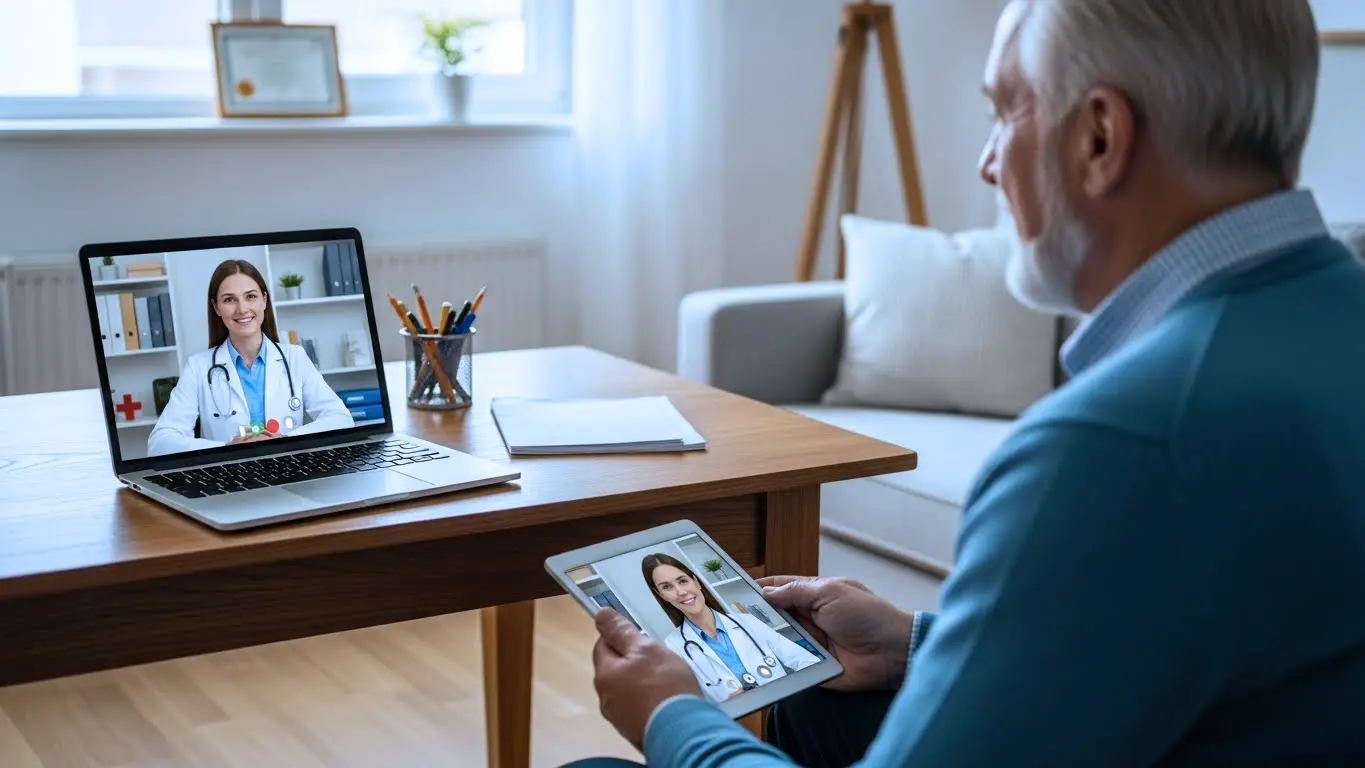
At its core, Telehealth refers to connecting with licensed healthcare providers remotely through secure technology, such as video calls, phone consultations, or online messaging. These visits are designed to support non-emergency care, provide guidance, and help people understand their next steps when in-person care may not be necessary right away. Telehealth does not eliminate the need for physical exams, emergency services, or hands-on treatment. Instead, it expands access and helps reduce unnecessary barriers to care.
Knowing when telehealth is appropriate matters just as much as knowing what it is. In some situations, a virtual visit can be a practical and responsible option. In others, seeking in-person or emergency care is the safer choice. Making that distinction protects patients, supports better outcomes, and builds trust in how telehealth is used.
This guide explains what telehealth is, how it works in practice, and the situations where it may — or may not — be a good fit. The goal is clarity, not persuasion. By understanding the role telehealth plays alongside traditional care, readers can make more informed decisions about when remote care makes sense and when it doesn’t.
What Is Telehealth?
Telehealth refers to the use of secure digital technology to connect patients with licensed healthcare providers without requiring an in-person visit. These connections typically happen through video calls, phone consultations, or secure online messaging. The purpose is not to replace traditional medical care, but to extend access to it when a physical exam or emergency intervention is not required.
According to the U.S. Department of Health & Human Services Health Resources & Services Administration (HRSA), tele-health refers to the use of electronic information and telecommunication technologies to support long-distance clinical health care, patient education, and public health services.
At a practical level, telehealth allows people to discuss health concerns, ask questions, and receive professional guidance from a qualified provider while remaining at home or another private location. This model can reduce travel barriers, shorten wait times, and make care more accessible for people who may have limited local options.
Telehealth is often confused with self-diagnosis tools or automated health apps. It is neither. A legitimate telehealth visit involves real communication with a licensed provider who evaluates whether remote care is appropriate for the situation. That provider may offer guidance, recommend next steps, or advise seeking in-person or emergency care when needed.
It’s also important to understand what telehealth is not. Telehealth does not perform physical exams, imaging, or procedures. It does not replace emergency services. And it does not guarantee a specific outcome, treatment, or prescription. The role of telehealth is to support decision-making and care access within clearly defined limits.
Many telehealth platforms, including services offered through RemoteMD, are designed specifically for non-life-threatening situations. Some may provide access to virtual urgent care, which focuses on timely guidance for concerns that require prompt attention but are not emergencies. This distinction matters. Virtual urgent care still operates within telehealth’s boundaries and does not substitute for emergency rooms or hands-on medical treatment.
When used appropriately, telehealth serves as a bridge between questions and care. It helps people understand their options, determine whether an in-person visit is necessary, and take informed next steps under the guidance of a licensed professional.
How Telehealth Works in Practice
Telehealth works by bringing a licensed healthcare provider and a patient together through secure digital tools instead of a physical exam room. While the technology enables the connection, the experience itself still follows a familiar structure: a conversation, an assessment of whether remote care is appropriate, and guidance on next steps.
A typical telehealth interaction begins when a patient requests a virtual visit or schedules a consultation through a telehealth platform. At the time of the appointment, the patient connects with a provider using video, phone, or secure messaging, depending on what the platform supports and what the situation allows. The goal is to create a private, real-time interaction that mirrors the communication of an in-person visit as closely as possible.
During the consultation, the provider listens to the patient’s concerns, asks follow-up questions, and gathers relevant context. Because telehealth does not involve physical exams, imaging, or hands-on procedures, providers rely heavily on communication and clinical judgment to determine whether remote care is appropriate. When the limits of telehealth are reached, providers may recommend in-person evaluation or emergency care instead.
What happens next depends on the situation. In some cases, the provider may offer general guidance, discuss possible explanations, or outline reasonable next steps. In others, the provider may advise scheduling an in-person visit, visiting urgent care, or seeking emergency services. Telehealth does not guarantee outcomes, diagnoses, or treatments. Each visit is evaluated individually, based on what can be safely addressed in a remote setting.
Some telehealth platforms, including RemoteMD, also offer access to virtual urgent care for non-life-threatening concerns that require timely attention. Virtual urgent care focuses on immediate access to a licensed provider rather than physical intervention. This model can be helpful when waiting for an in-person appointment is impractical, but it still operates within the same boundaries as telehealth overall. It does not replace emergency rooms, imaging, or hands-on treatment.
Throughout the process, the provider remains responsible for deciding whether telehealth is appropriate at each step. That decision protects patients and reinforces an important principle: telehealth expands access to care, but it does not eliminate the need for in-person or emergency services when those options are safer or more appropriate.
Understanding how telehealth works in practice helps set realistic expectations. It clarifies what virtual care can support, where its limits lie, and why provider judgment plays such a central role in every telehealth interaction.
When Telehealth May Be an Appropriate Option
Telehealth works best when the situation allows for thoughtful discussion without the need for physical examination, imaging, or hands-on treatment. In those cases, a virtual visit can offer timely access to a licensed provider while maintaining appropriate medical boundaries.
Telehealth may be an appropriate option when the concern is non-emergency in nature and when remote communication provides enough context for a provider to evaluate next steps. The focus is not speed for its own sake, but access paired with professional judgment.
In practice, telehealth is often used in situations such as:
- General health questions that benefit from professional input rather than self-research
- Follow-up conversations after a previous visit or diagnosis
- Non-urgent concerns where symptoms are stable and not worsening
- Mental health conversations, where discussion and guidance are central
- Care access challenges, such as limited local availability or mobility constraints
In some cases, telehealth platforms also provide access to virtual urgent care, which focuses on timely guidance for non-life-threatening concerns that require prompt attention. Virtual urgent care does not replace emergency rooms or in-person urgent care clinics. Instead, it offers immediate access to a licensed provider who can help determine whether remote care is sufficient or whether in-person evaluation is needed.
What matters most is not the category of concern, but whether the situation can be responsibly addressed without a physical exam. A licensed provider evaluates that decision during the visit, and that evaluation may change as new information emerges. When telehealth is no longer appropriate, providers will advise seeking in-person or emergency care.
Telehealth can support better access and clearer decision-making when it’s used in the right circumstances. It works best when expectations remain realistic and when people understand that remote care fits alongside in-person services, not in place of them. Clear boundaries help ensure telehealth is used responsibly and safely.
When Telehealth Is Not Appropriate
Telehealth has clear benefits, but it also has clear limits. Some situations require hands-on evaluation, physical examination, or immediate medical intervention. In those cases, remote care is not the safest or most effective option.
Telehealth is not appropriate for emergencies or for conditions that may be life-threatening. Situations that involve severe symptoms, rapid deterioration, or immediate risk require in-person assessment and emergency services. Virtual visits are not designed to replace emergency rooms, paramedics, or hospital-based care.
Telehealth is also not suitable when a physical exam, imaging, laboratory testing, or procedures are necessary to evaluate a condition properly. Certain concerns simply cannot be assessed through conversation alone. When visual cues, touch, or diagnostic tools are required, in-person care becomes essential.
Examples of situations where telehealth may not be appropriate include:
- Chest pain, trouble breathing, or loss of consciousness
- Severe injuries, uncontrolled bleeding, or sudden trauma
- Rapidly worsening symptoms or intense pain
- Conditions that require immediate physical examination or testing
- Situations where emergency care has already been advised
In these cases, delaying in-person care to pursue a virtual visit can increase risk. Licensed providers are trained to recognize when telehealth is not appropriate and will advise patients to seek urgent or emergency care when needed. That guidance is an important safety feature, not a limitation.
Telehealth also depends on clear communication. When symptoms are difficult to describe, when context is incomplete, or when technology interferes with communication, remote care may no longer be the best option. Providers may recommend transitioning to in-person care to ensure accurate evaluation.
Telehealth works best as part of a broader healthcare system. Clear boundaries protect patients, support better outcomes, and ensure that remote care is used responsibly rather than as a substitute for services that require physical presence.
Telehealth vs In-Person Care: Understanding the Difference
Telehealth and in-person care serve different purposes, even though they often address similar concerns. The key difference lies in how care is delivered, not in whether care is important. Each model exists because certain situations benefit from remote access, while others require physical presence.
Telehealth focuses on communication. It allows patients and licensed providers to connect through secure technology to discuss concerns, review symptoms, and determine appropriate next steps. This model works well when a conversation provides enough information for a provider to guide care safely and when a physical exam is not required.
In-person care, by contrast, allows providers to examine patients directly. Physical exams, imaging, lab work, and procedures all depend on hands-on evaluation. These tools play a critical role when symptoms are complex, unclear, or potentially serious. In those situations, in-person care offers capabilities that telehealth cannot replicate.
Both models rely on professional judgment. A telehealth visit may lead to reassurance, follow-up guidance, or referral to in-person care. An in-person visit may confirm that ongoing care can safely continue through remote check-ins. One does not replace the other; they function best when used together.
To summarize the distinction at a high level:
- Telehealth supports access through remote communication when physical exams are not necessary
- In-person care provides hands-on evaluation, testing, and treatment when physical presence is required
- Emergency services address life-threatening situations that demand immediate intervention
Understanding these differences helps set realistic expectations. Telehealth offers convenience and access within defined limits, while in-person care provides depth and physical assessment when those limits are reached.
Telehealth fits alongside traditional care, not above it. Knowing which option aligns with a given situation supports safer decisions and more effective use of healthcare resources.
What Telehealth Is (and Is Not)
Telehealth often gets misunderstood because it sits between traditional in-person care and digital convenience. Clear definitions help prevent unrealistic expectations and support safer decisions.
What Telehealth Is
Telehealth is a way to connect with a licensed healthcare provider remotely using secure technology. Its role is to support access, communication, and informed next steps when a physical exam is not required.
Telehealth is:
- A remote consultation conducted through video, phone, or secure messaging
- A professional interaction guided by licensed providers
- A tool for non-emergency care, follow-ups, and general guidance
- A method for determining next steps, including whether in-person care is needed
Some platforms also offer virtual urgent care, which focuses on timely access for non-life-threatening concerns that need prompt attention. Virtual urgent care still operates within telehealth’s limits and does not replace physical evaluation or emergency treatment.
What Telehealth Is Not
Telehealth has boundaries, and those boundaries protect patients.
Telehealth is not:
- Emergency care or a substitute for calling emergency services
- A replacement for physical exams, imaging, or laboratory testing
- A guarantee of diagnosis, treatment, or prescriptions
- A solution for severe or rapidly worsening symptoms
Guidance from the U.S. Department of Health & Human Services (HHS) explains that tele-health supports access and continuity of care, but does not replace services that require physical examination, diagnostic testing, or emergency medical intervention.
According to MedlinePlus, a consumer health resource from the U.S. National Library of Medicine, tele-health is not appropriate for emergencies or situations that require immediate, hands-on medical evaluation or treatment.
When a situation requires hands-on evaluation or immediate intervention, tele-health is no longer appropriate. Providers will advise transitioning to in-person or emergency care when those limits are reached.
Key Things to Know Before Using Tele-health
Telehealth can be a helpful option when it’s used with the right expectations. Understanding how virtual care works — and what it requires from both patients and providers — helps avoid confusion and supports safer outcomes.
First, telehealth depends on clear and honest communication. Because providers cannot perform physical exams during a virtual visit, they rely heavily on what patients share. Accurate descriptions of symptoms, timing, and changes matter. When information is incomplete or unclear, providers may recommend in-person care to ensure proper evaluation.
Second, provider judgment guides every telehealth visit. A licensed healthcare provider decides whether a concern can be addressed remotely or whether in-person or emergency care is more appropriate. That decision may change during the visit as new information emerges. This flexibility is an important safety feature, not a limitation.
Third, telehealth does not guarantee a specific outcome. A virtual visit may result in guidance, reassurance, follow-up recommendations, or referral to another level of care. Prescriptions, diagnoses, and treatment plans depend on what can be responsibly determined in a remote setting and on applicable medical and regulatory standards.
Technology also plays a role. Telehealth requires a stable connection, a private setting, and the ability to communicate without interruption. When technical issues interfere with the visit, providers may advise rescheduling or transitioning to in-person care to maintain accuracy and safety.
Finally, telehealth works best as part of a broader healthcare approach. It complements in-person services rather than replacing them. Knowing when to use virtual care — and when to seek hands-on evaluation — helps ensure telehealth remains a reliable and responsible option.
How RemoteMD Approaches Telehealth
RemoteMD approaches telehealth with a focus on access, clarity, and defined limits. The goal is not to replace traditional healthcare, but to support people who need professional guidance when in-person care is not immediately required.
Telehealth services offered through RemoteMD connect users with licensed healthcare providers through secure digital tools. Each interaction begins with an evaluation of whether remote care is appropriate for the concern being discussed. When telehealth fits the situation, providers focus on listening, assessing context, and guiding next steps. When it does not, providers advise seeking in-person or emergency care.
RemoteMD also offers virtual urgent care for non-life-threatening concerns that require timely attention. This service emphasizes immediate access to licensed providers rather than physical intervention. Virtual urgent care remains subject to the same boundaries as all telehealth services. It does not include physical exams, imaging, or emergency treatment, and it does not replace emergency rooms or in-person urgent care clinics.
Clear communication plays a central role in this approach. Providers rely on accurate information and open dialogue to make responsible decisions during virtual visits. When a concern cannot be safely addressed through telehealth, guidance shifts toward in-person evaluation to protect patient safety.
RemoteMD’s role in telehealth reflects a broader principle: remote care works best when it operates within clearly defined limits. By reinforcing those limits and prioritizing provider judgment, telehealth can remain a useful part of the healthcare system without creating false expectations or unnecessary risk.
When to Seek In-Person or Emergency Care
Telehealth plays an important role in access and guidance, but some situations require immediate, hands-on medical attention. Recognizing those moments protects health and safety and ensures care happens in the right setting.
Emergency care is necessary when symptoms suggest a life-threatening or rapidly worsening condition. Telehealth is not designed to handle these situations and should not delay urgent medical intervention. When there is uncertainty, erring on the side of in-person or emergency care is the safest choice.
In-person evaluation is also essential when physical exams, diagnostic testing, or procedures are required to understand what is happening. Certain concerns cannot be assessed through conversation alone, no matter how detailed the discussion may be.
Situations that warrant in-person or emergency care include, but are not limited to:
- Chest pain, difficulty breathing, or sudden weakness
- Severe injuries, uncontrolled bleeding, or head trauma
- Loss of consciousness or confusion
- High or persistent fever with worsening symptoms
- Severe pain or symptoms that escalate quickly
- Any condition where emergency services have been advised
In these cases, delaying care in favor of a virtual visit can increase risk. Licensed providers recognize these limits and will direct patients to emergency or in-person services when telehealth is not appropriate. That guidance reflects responsible care, not restriction.
Telehealth works best when it supports decision-making rather than replacing necessary intervention. Clear awareness of when to seek in-person or emergency care helps ensure that remote care remains safe, effective, and appropriately used.
Conclusion
Telehealth has become an important part of how people access care, but its value depends on using it appropriately. It offers a way to connect with licensed providers, ask questions, and receive guidance when a physical exam is not required. At the same time, telehealth has clear limits that protect patient safety and ensure care happens in the right setting.
Understanding those limits makes a real difference. Some concerns can be addressed responsibly through non-emergency care, including general questions, follow-up conversations, and situations where access to in-person services is limited. Other situations call for hands-on evaluation, diagnostic testing, or emergency care. Recognizing that distinction helps prevent delays in care and supports better outcomes.
Telehealth works best when it complements traditional healthcare rather than attempting to replace it. Clear expectations, honest communication, and provider judgment remain central to every virtual visit. When those elements align, telehealth can serve as a reliable tool within a broader healthcare system.
Informed decisions support safer, more effective use of telehealth. The safest path becomes clearer when people know when virtual care fits and when in-person or emergency care is the better option.
Key Takeaways: What Is Telehealt?
- Telehealth connects patients with licensed healthcare providers through secure digital tools when a physical exam is not required.
- Telehealth supports non-emergency care, follow-up conversations, and general guidance, but it does not replace hands-on evaluation or emergency services.
- Some platforms offer virtual urgent care for non-life-threatening concerns that need timely attention. This care remains distinct from emergency rooms and in-person urgent care clinics.
- Telehealth is not appropriate for emergencies, severe symptoms, rapidly worsening conditions, or situations that require physical exams, imaging, or diagnostic testing.
- Provider judgment determines whether remote care is appropriate during each visit and may change as new information emerges.
- Telehealth and in-person care serve different roles and work best when used together rather than as substitutes.
- Clear expectations, honest communication, and awareness of telehealth’s limits support safer and more effective care decisions.
- Knowing when to use telehealth — and when to seek in-person or emergency care — helps reduce risk and improves overall care outcomes.
Frequently Asked Questions
What is Telehealth used for?
Telehealth is used to connect patients with licensed healthcare providers remotely for non-emergency care. It can support general health questions, follow-up conversations, mental health discussions, and guidance when a physical exam is not required. Providers determine whether telehealth is appropriate based on the information shared during the visit.
Is Telehealth the same as urgent care?
Telehealth and urgent care are not the same, but some platforms offer virtual urgent care as part of telehealth services. Virtual urgent care focuses on timely access to licensed providers for non-life-threatening concerns. It does not replace emergency rooms or in-person urgent care clinics that provide physical exams or procedures.
When should Telehealth not be used?
Telehealth should not be used for emergencies, severe symptoms, rapidly worsening conditions, or situations that require physical exams, imaging, or diagnostic testing. In those cases, in-person or emergency care is the safest option. Providers will advise when telehealth is not appropriate.
Does Telehealth replace in-person medical care?
Telehealth does not replace in-person medical care. It works alongside traditional healthcare by offering remote access when appropriate. Some concerns require hands-on evaluation, testing, or treatment that can only be provided in person. Both models serve different roles within the healthcare system.
Medical Disclaimer
This content is provided for educational purposes only and is not intended to diagnose, treat, or replace professional medical advice. Telehealth services may not be appropriate for every situation, and care decisions should always be made in consultation with a licensed healthcare provider.
This information is not a substitute for professional medical advice, diagnosis, or treatment. If you have questions about a medical condition or your health, consult a qualified healthcare professional.
Telehealth services are not intended for emergencies. If you believe you are experiencing a medical emergency, contact emergency services immediately.
When to Seek In-Person or Emergency Care
Some health concerns require hands-on evaluation or immediate medical attention. Telehealth should not delay care in situations where safety may be at risk.
Seek in-person or emergency care right away if you experience:
- Chest pain, difficulty breathing, or sudden weakness
- Severe injuries, uncontrolled bleeding, or head trauma
- Loss of consciousness, confusion, or disorientation
- Severe or rapidly worsening symptoms
- Any condition where emergency services have been advised
When symptoms are serious or uncertain, in-person or emergency care is the safest option.
Learn More About Telehealth
Telehealth can be a helpful option when it’s used appropriately and with clear expectations. If you’d like to better understand how virtual care works and what services are available, you can explore RemoteMD’s telehealth offerings.